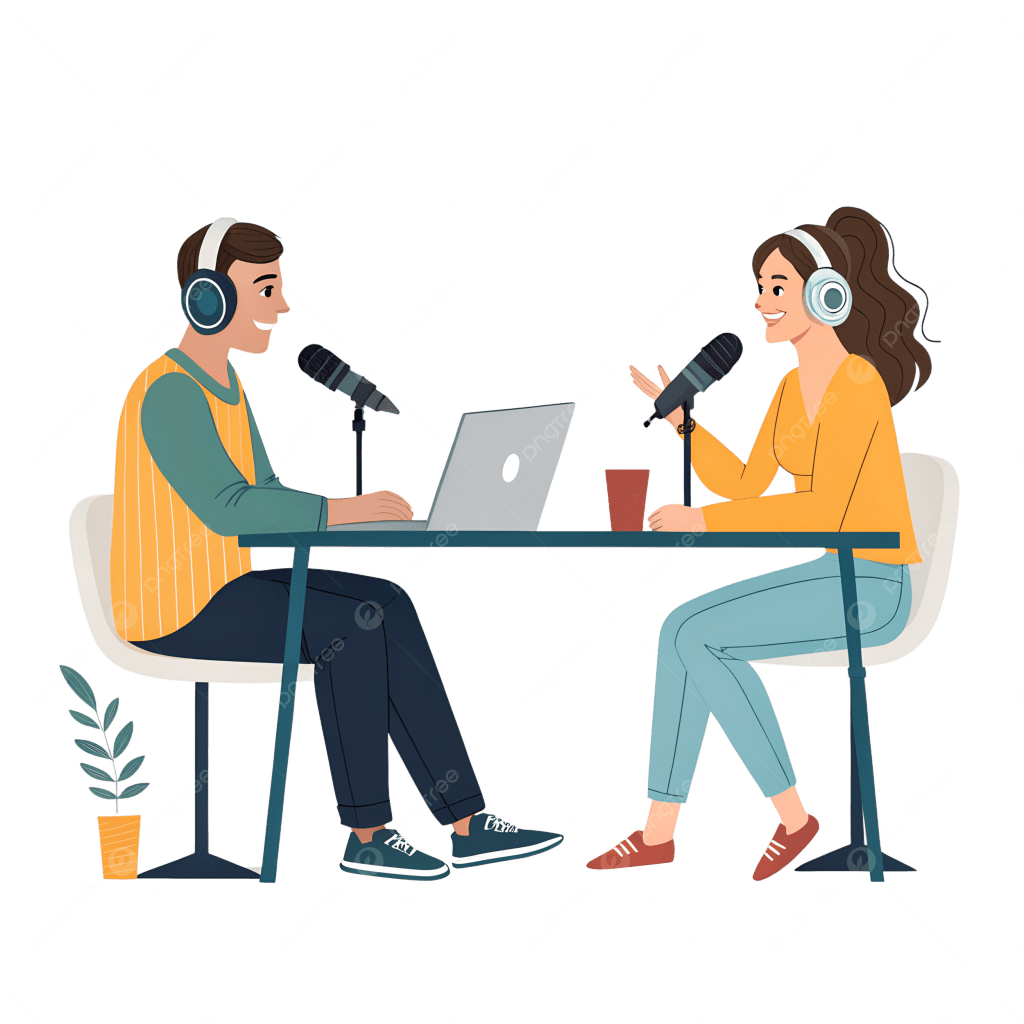
Hey, Burger Scoot fans, did you know my good AI buddies Pip and Mara host a podcast where they discuss some of my blog posts? It’s true! I guess this is WordPress’ attempt to expand into a different market. Here’s one of their shows! Enjoy, I didn’t!
Pip: You are listening to Burger Scoot, where one man’s yoga mat, record collection, and self-fulfilling prophecies collide at a pace that would embarrass a slow-pitch softball team.
Mara: Whatsystem has been busy — we’re covering the mat and the studio, the weight of memory and aging, short fiction and wordplay, and a sprawling look at books, music, and sports.
Pip: Let’s start with the yoga studio, where the real question is why nobody will touch you.
The Mat, the Studio, and the Quest for Adjustments
Mara: The central tension here is simple: after years of practice, one yogi remains the stiffest person in every class and the one least likely to receive a hands-on correction from any teacher.
Pip: The post lays out the case with characteristic self-awareness — and lands a line that earns its place. On what would happen if he got too handsy, the post imagines being “bludgeoned to death with Mandukas, Gaiams, Lulumons, and Zazzles.”
Mara: That’s from Observations From the Mat number twelve, which runs through the whole adjustment question with real curiosity — including a genuine hypothesis that female teachers at a corporate studio may be discouraged from touching male students.
Pip: There are two exceptions to the no-adjustment rule, and both matter. One teacher quietly places blocks under his hands during Fish Pose every single time, and he whispers thank you twice — once per arm.
Mara: The Beautiful Word, a repost from 2017, pulls the Sanskrit thread in a different direction entirely — tracing his attachment to the word Namaste from his very first class, where a teacher translated it as “the light in me celebrates the light in you.”
Pip: And then there is What Is Sanskrit for Flirting, a six-sentence story in which a regular studio exchange — “There’s the troublemaker,” a wink, a crack about double-parking a mat — is described as the closest thing to flirting he has given or received in thirty-five years.
Mara: The World’s Most Expensive Yoga Mat rounds the segment out on a practical note: a Manduka eKO purchased on the studio owner’s recommendation, somewhere between ninety-six and a hundred fourteen dollars, and forgotten on the bike ride over an alarming number of times at five dollars a rental.
Pip: The mat that sticks to the floor but not to the mind.
Mara: Which raises the question of what sticks more broadly — memory, self-image, the stories we keep telling about ourselves.
Memory, Aging, and the Weight of a Self-Fulfilling Prophecy
Mara: The anchor post here opens a long reckoning: a 1987 crying session in an academic advisor’s office, a dropped class, and a phrase that has followed the writer for nearly four decades.
Pip: Professor William Dorman apparently had a gift for hard truths delivered with enough care that they lodged permanently. The post quotes him indirectly but lands the concept directly: “It’s been 39 years since my mentor told me that I was living a self-fulfilling prophecy. He wasn’t dooming me, he was telling me this hard truth so I could shake it, work my way through it, but even today I see this in the mirror after I have fucked up something.”
Mara: The upshot is that the prophecy didn’t stay in the classroom. Me and My Self-Fulfilling Prophecy traces it through Little League, dating, golf, chess, yoga, and a string of jobs — a pattern so durable that even being pursued by someone like Mary, described as possibly the most beautiful woman he had ever seen in person, made no dent in it.
Pip: A friend named Rick tried to play Tony Robbins, quietly polling female coworkers on his behalf. It created paralysis, not confidence.
Mara: What I Have Been Doing in My Retirement takes a lighter angle on the same territory — the gap between what retirees say they’ll do and what actually happens, which in his case is a La-Z-Boy, a DoorDash account, and a digital scale purchased specifically so the other possible numbers don’t flash before his eyes first.
Pip: The Bitter Incongruity of Old Man Problems and the Triumph Bonneville in the Window is a repost that stitches both moods together — a gun-barrel grey Triumph Bonneville T1200 sitting in a supplements shop window, surrounded by fish oil and chromium, while the man buying calcium and vitamin D stares at it from the other side of his own aging.
Mara: He describes it as “a surprising slap in the face” — the motorcycle representing everything the supplement bottles quietly admit you no longer are.
Pip: From motorcycles you can’t ride to chess puzzles you can’t solve — the short fiction makes the same point in six sentences.
Six Sentences, Chess Puzzles, and a Scooter’s Law of Averages
Mara: Checkmated by My Own Brain sets up its stakes immediately — the narrator is bad at puzzles, always has been, and ties this directly to the self-fulfilling prophecy thread running through the longer posts.
Pip: The piece earns its form. Six sentences, and the sixth one lands: “my love for chess puzzles has confirmed two things: I’m into a less physically harmful form of self-flagellation, and puzzles are one more reason I could never cut it as my favorite superhero.”
Mara: The superhero in question is Batman — specifically the version where The Riddler’s brain teasers are the difference between life and death for Gotham, and the narrator concedes that many good people would have died on his watch.
Pip: The word “patzer” does real work in that piece — it is the chess term for a weak player, and it doubles as a self-assessment that is fond and accurate at the same time.
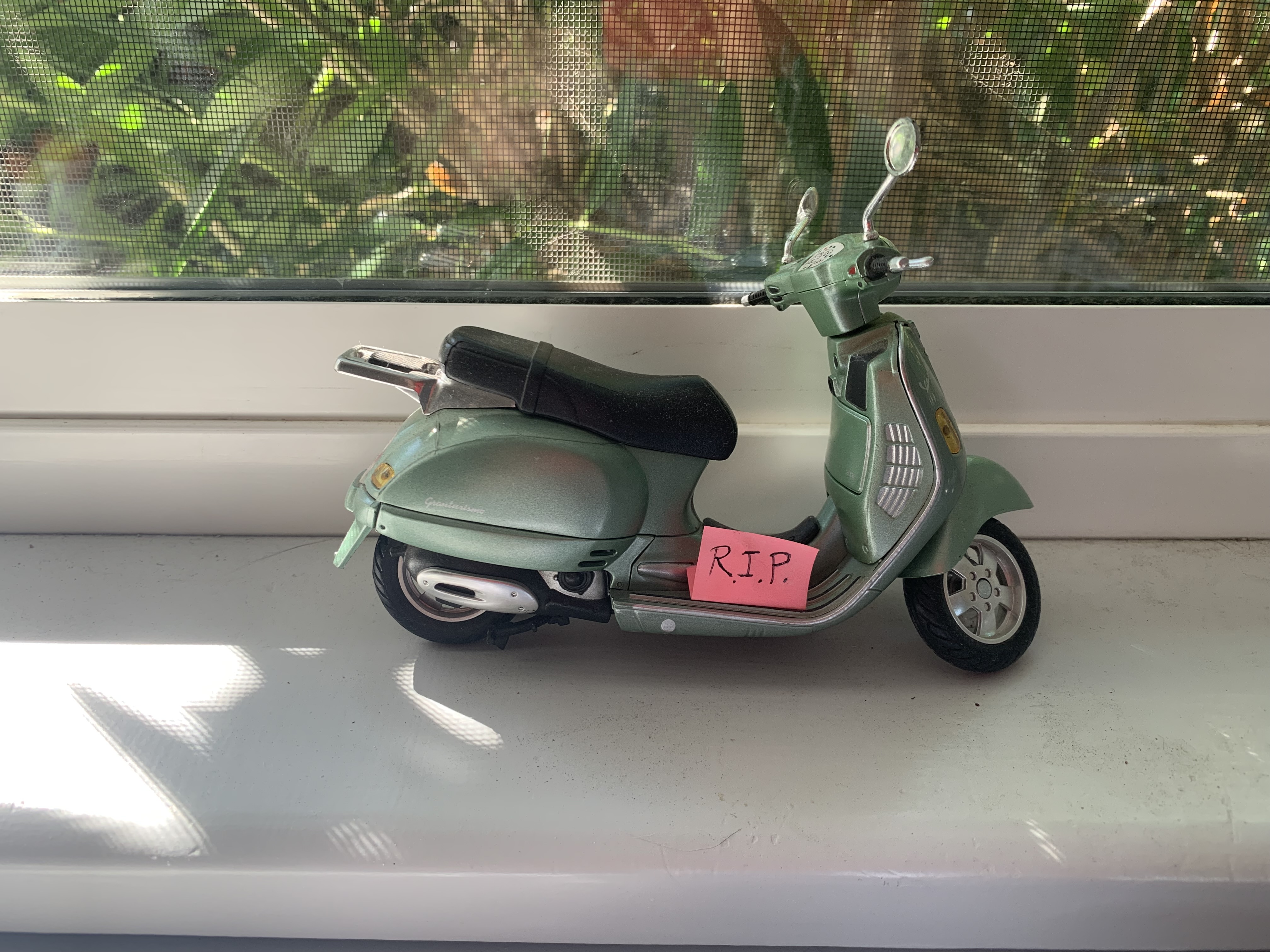
Mara: When My Number Was Up operates in the same compressed form but with a harder edge. A helicopter ride over Alaskan glaciers prompts a meditation on the law of averages — how many more runs before something fails — and the fifth sentence answers it: September 25, 2024, a totaled Vespa, fractured ribs, a torn rotator cuff.
Pip: The sixth sentence is the one that stays with you.
Mara: “It’s a bitch to think this way; I guess that’s the only thing that doesn’t heal after the fractured ribs and a torn rotator cuff mend.” The accident appears in other posts as backstory, but here it is the whole story, compressed into the space the form allows.
Pip: Six sentences turns out to be exactly the right container for things that don’t need more room — which brings us to the books that do.
Best Books, Born to Run, and a Baseball Triple Nobody Forgot
Mara: The Best Books I Read in 2025 is a wide-ranging list — nonfiction running from Caitlin Clark and the revolution in women’s sports to Timothy Egan’s account of the Dust Bowl, which Bennett’s investigation found was largely man-made.
Pip: The fiction side includes Percival Everett’s James, Huckleberry Finn retold from Jim’s perspective, and Geraldine Brooks’ Horse, which the post describes as weaving “an enslaved person who grooms the thoroughbred from a bay foal to a record-setting adult across tracks in the South; an itinerant painter who captures the horse’s beauty; a twentieth-century New York City gallery owner who becomes obsessed with the antebellum painting.”
Mara: That quote covers the novel’s architecture in one sentence. Several titles on the list are flagged as potential films or limited series, including Horse, Intermezzo, and Robin Sloan’s Sourdough.
Pip: My Short Love Affair with Popular Music is the long one — a full arc from a high school AV room and a Springsteen record in 1975, through Sex Pistols at Winterland, through classical music and jazz, and out the other side into audiobooks and left-wing podcasts.
Mara: The Winterland Springsteen concert of December 1978 gets its due: “the greatest concert — by far — I would ever experience,” a night he says nearly ruined concert-going because nothing after ever matched it.
Pip: And The Triple Redux closes the segment on a sports note — a slow-pitch softball three-bagger hit so improbably that his teammates rattled the chain-link fence, followed immediately by a teammate’s observation that he ran exactly like Ron Cey, known as The Penguin.
Mara: He writes that the comment “may have defined all the looks” and might be the reason he forgot the longest ball he ever hit until a friend mentioned it in an email decades later.
Pip: What holds all of this together is the same thing that holds a yoga pose together — imperfectly, stubbornly, with someone occasionally placing blocks under your hands.
Mara: The self-fulfilling prophecy, the mat fees, the Triumph in the Window — they are all the same story told from different angles.
Pip: More of those angles next time.
 BURGERSCOOT
Leave a comment