It’s January, time to review the books I read last year. Most years, I never get around to this, but this time around, I thought it might prime the writing pump, so to speak. I haven’t so far, but hopefully I’ll get inspired soon. This time around on the “Best Books I Read” semi-annual post, I’m adding a “[TITLE] was one of my favorite reads last year” at the end of any book that I really enjoyed, and commenting on if I thought a book would make a good film or a limited series. Not that I am any authority on this, but because it is my blog, damn it!
So here we go in no particular order:
IN NONFICTION:
On Her Game: Caitlin Clark and the Revolution in Women’s Sports
by Christine Brennan, 2025
I very rarely read sports books, and this would have to be the first on women’s sports. Still, it is excellently written by one of the best sports journalists, and the subject matter has captivated me ever since I stumbled upon a Caitlin Clark highlight reel during her Junior year at the University of Iowa.
Your Spine, Your Yoga: Developing Stability and Mobility for Your Spine by Bernie Clark, 2018
I would suggest any yogi interested in how their body reacts to their practice to read any of Clark’s trilogy of yoga meets anatomy: Your Body, Your Yoga, Your Upper Body, Your Yoga, and this volume.
The Worst Hard Time by Timothy Egan, 2005
Some people think the Dust Bowl of the 1930s was just bad luck. Still, when President Roosevelt had Hugh Bennett of the Soil Conservation Service (now the Natural Resources Conservation Service) investigate the tragedy, Bennett found that much of it was man-made. The Worst Hard Time chronicles the human tragedy of this phenomenon and ultimately how it was mostly avoidable.
The Art Thief by Michael Finkel, 2023
Master thief Stéphane Breitwieser’s obsession with art, who stole not for profit, but to covet the works in his cramped attic. Stranger than fiction.
No one has been quite as successful at stealing art as the master thief Stéphane Breitwieser. Finkel does an excellent job telling this incredible true story of obsession. There is a recent film bearing the same name released in 2025, but it is not based on Michael Finkel’s work.
Moral Ambition: Stop Wasting Your Time and Start Making a Difference by Rutger Bregman, 2024
From the Dutch historian who brought us Utopia for Realists and Humankind: A Hopeful History, Rutger Bregman refuses to throw in the towel on humanity. Moral Ambition is his latest. I can’t help but root for him. He’s in humanity’s corner, and I thank him for that!
Okay, this isn’t directly related to his latest book, but it is critiques like this one that make me pick up every book the Dutch historian writes.
Going Big: FDR’s Legacy and Biden’s New Deal by Robert Kuttner, 2022
A book any liberal/democrat should read who thought Biden was a failure from the start, and who is still under the delusion that Clinton and Obama were good for the country.
The Rise and Fall of the Neoliberal Order: America and the World in the Free Market Era by Gary Gerstle, 2022, and The Master Plan: The Hidden Plot to Legalize Corruption in America by David Sirota, Jared Jacang Maher, 2025
David Sirota’s Master Plan shows us the history of neoliberalism from The Powell Memo through Barack Obama’s two uninspiring administrations, and it covers the time and Joseph Biden’s strides to end neoliberalism. Gary Gerstle’s Rise and Fall … is a well-thought-out work that might show us the end of these depressing times.
IN FICTION:
Horse by Geraldine Brooks, 2022
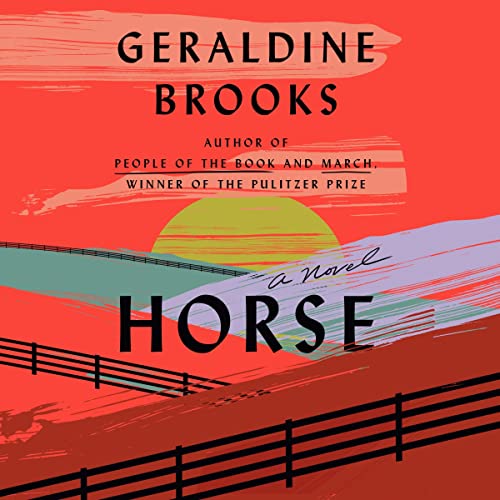
My wife suggested this one, and I was glad she did. This brilliant work of literary fiction is based on the remarkable true story of the legendary American thoroughbred Lexington. Horse weaves many stories about the horse: an enslaved person who grooms the thoroughbred from a bay foal to a record-setting adult across tracks in the South; an itinerant painter who captures the horse’s beauty; a twentieth-century New York City gallery owner who becomes obsessed with the antebellum painting of the horse; as well as a twenty-first-century scientist and an art historian who become interested in the horse—a novel of art and science, love and obsession, and our unfinished reckoning with racism. “Horse” was one of my favorite reads last year. This would make an excellent film or a limited series.
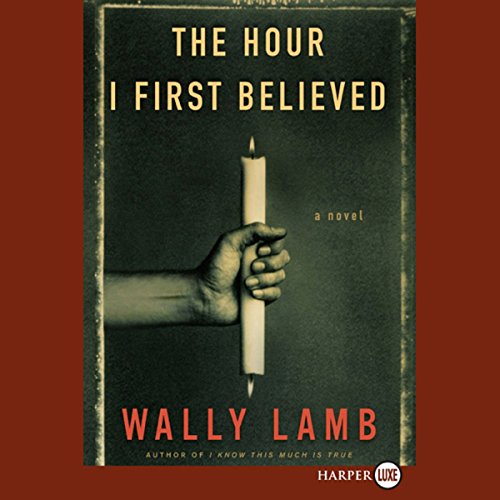
The Hour I First Believed by Wally Lamb, 2008
This book is a beautiful and often brutal piece of storytelling. assembling a variety of voices and an ensemble of characters. The author also sets up a critical moment in the story to take place at Columbine High School in April of 1999! ”The Hour I First Believed” was one of my favorite reads last year.
James by Percival Everett, 2024
In this version of The Adventures of Huckleberry Finn, we get the famous story from Jim’s perspective. Very well written, with compelling new storylines. “James” was one of my favorite reads last year.
Y: The Last Man, Compendium 2 by Brian K. Vaughan, Pia Guerra (Illustrations), 2022
A riveting graphic novel, the second and final compendium (meaning big) book. Think The Last Man on Earth/Omega Man/I Am Legend, but in this story, instead of virtually everyone dying, only all the mammals with a Y chromosome die, except for Yorick, an amateur escape artist, and his pet male primate. Worth looking into if you like graphic novels. You can get this series in smaller bites if you don’t want to buy the lap-breaking compendia.
Sourdough by Robin Sloan, 2017
I don’t know how to bake bread or anything else for that matter, but I found “Sourdough” to be mystical, compelling, and, at times, pleasingly outrageous.
Lois Clary is a software engineer who lives in San Francisco and develops a friendship with the owners of a neighborhood soup shop. When the shop’s owners are compelled to leave the country, they give Lois their sourdough starter, along with instructions and all the hardware needed to bake their mystically inspired bread.
As Lois begins baking the bread and sharing it with her neighbors and co-workers, she realizes the only thing more satisfying than seeing her friends enjoy her sourdough bread is the love and satisfaction she gains from the whole process of making it.
This would make an excellent film or a limited series. I could see how AI would be needed during the market scene near the end of the book.
The Flamethrowers by Rachel Kushner, 2013
From Goodreads.com
The year is 1975, and Reno—so-called because of the place of her birth—has come to New York intent on turning her fascination with motorcycles and speed into art. Her arrival coincides with an explosion of activity in the art world—artists have colonized a deserted and industrial SoHo, are staging actions in the East Village, and are blurring the line between life and art. Reno meets a group of dreamers and raconteurs who submit her to a sentimental education of sorts. Ardent, vulnerable, and bold, she begins an affair with an artist named Sandro Valera, the semi-estranged scion of an Italian tire and motorcycle empire. When they visit Sandro’s family home in Italy, Reno falls in with members of the radical movement that overtook Italy in the seventies. Betrayal sends her reeling into a clandestine undertow.
The Flamethrowers is an intensely engaging exploration of the mystique of the feminine, the fake, the terrorist. At its center is Kushner’s brilliantly realized protagonist, a young woman on the verge. Thrilling and fearless, this is a major American novel from a writer of spectacular talent and imagination.
Flamethrowers is an unmistakably American story.
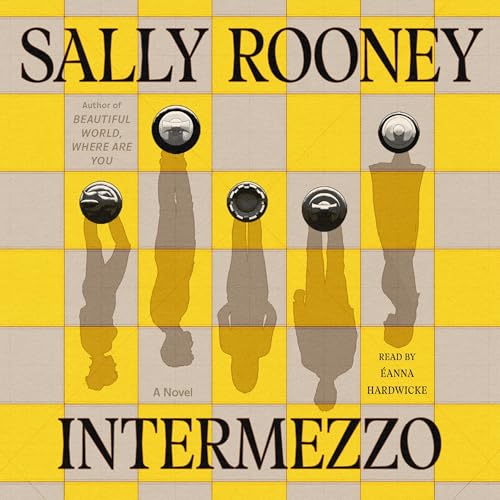
Intermezzo by Sally Rooney, 2024
I was introduced to the works of Sally Rooney via the Hulu limited streaming series Normal People. I then read the book and loved the story even more. Intermezzo is not as compelling as “Normal People,” but it is worth reading.
From Goodreads.com
“Peter is a Dublin lawyer in his thirties—successful, competent, and apparently unassailable. But in the wake of their father’s death, he’s medicating himself to sleep and struggling to manage his relationships with two very different women—his enduring first love, Sylvia, and Naomi, a college student for whom life is one long joke.
Ivan is a twenty-two-year-old competitive chess player. He has always seen himself as socially awkward, a loner, the antithesis of his glib elder brother. Now, in the early weeks of his bereavement, Ivan meets Margaret, an older woman emerging from her own turbulent past, and their lives become rapidly and intensely intertwined.
For two grieving brothers and the people they love, this is a new interlude—a period of desire, despair, and possibility; a chance to find out how much one life might hold inside itself without breaking.”
Intermezzo was one of my favorite reads last year. This would make an excellent film or a limited series. Alas, author Sally Rooney said after writing the screenplays of both Normal People and Conversations with Friends that she doesn’t see writing another screenplay anytime soon.
The Iron Heel, 1908, and White Fang, 1906, both by Jack London
Two very good books by one of the greatest American writers of the early twentieth century. White Fang is about a half-wolf, half-dog that experiences the best and the worst of humanity. Though it was published in 1908, The Iron Heel is a timely read! It chronicles the rise of an authoritarian state in the U.S. London predicts the fall of Capitalism, the rise of an oligarchic tyranny, and a socialist movement that will ultimately take its place.
I would like to see a film or a limited series of The Iron Heel, not as a period piece but set in the twenty-first century. I don’t think any studio would touch it, though. White Fang was made into a 1991 film with Ethan Hawke, but from the trailer, it looks more like a film about the humans around White Fang than about the wild canine himself.
Honorable Mentions:
How It Went, 2022, and Watch With Me, 1995, by Wendell Berry
I love Wendell Berry’s nonfiction, but I can’t completely appreciate his fiction. I enjoy that he created a fictional world set in the fictional town of Port William in his home state of Kentucky. If nothing else, Berry’s fiction is not edgy, lewd, or terrifying—just simple stories told with down-home humor and warmth.
Wishin’ and Hopin’ by Wally Lamb, 2009
This novella is a heartwarming historical fiction that generally focuses on growing up in the 1950s and ’60s, specifically on the Christmas season in the early ‘60s. I read it not because it was the holiday season and a relatively quick read, but because it was by Wally Lamb. (See The Hour I First Believed above.) It is nowhere as good, but it has its moments.
No One Goes Alone by Erik Larson, 2021
I love Erik Larson’s nonfiction. This work of fiction did not engage me as The Devil in the White City, Thunderstruck, The Demon of Unrest, Dead Wake, and the rest of his nonfiction did. Still, it was an interesting read.
Tell Me How It Ends: An Essay in Forty Questions by Valeria Luiselli, 2016
From Goodreads.com
“Structured around the forty questions Luiselli translates and asks undocumented Latin-American children facing deportation, Tell Me How It Ends (an expansion of her 2016 Freeman’s essay of the same name) humanizes these young migrants and highlights the contradiction of the idea of America as a fiction for immigrants with the reality of racism and fear both here and back home.”

 BURGER SCOOT
Leave a reply to olivia Cancel reply