
Of the nearly 380 posts I have published on this and my previous blog, I have reposted only a few (including The Triple, which I have posted three times). If I had the time, I would repost all of them now that better grammar-check tools are available. You, dear reader, are now reading another of these reposts where I run the original through Grammarly and/or the new Microsoft Editor to see just how horrible a writer I really am.
The reason for reposting and updating this post came by way of a request from a family member who took the preverbal bait when I commented in an email that I no longer listen to popular music and that I even wrote a blog post about it. So, when Kirk (a singer/songwriter) with his own YouTube music channel wanted to read the post, I knew he and anyone else reading this four-year-old essay would find many grammatical errors.
Ironically, the original, warts and all, is one of my better posts, but that is not to say much. Still, I had to put some lipstick on this pig. So, that has compelled me to not only repost (clean up) the original, but also to rewrite some of it and add a postscript since there has been a minor development in the three years after originally publishing this post. So here is the new and improved My Short Love Affair with Music
1975, Rio Americano High School’s AV Room: Born to Run
It was late in the fall of my junior year in high school. I must have been roaming the halls during a period where I had dropped out of a course. The dropped class was most likely Ceramics where I spent the whole semester flirting with Sandy, a big girl–the only kind who would flirt back. The teacher warned me to drop out, or he would give me an “F” for not submitting enough fired work. (Let it be known that Sandy was just as unproductive as I was. She claimed she would be receiving a passing grade solely on the fact that she was the younger sister of the teacher’s protégé.)
It was during one of these “open periods” when I ran into Marc. Marc and I were not close, but we both knew Jesse–a close friend of mine. Marc invited me into the high school’s AV Room. I never gave much thought to the students who worked pushing around the large video players and TVs on black carts and who set up overhead projectors in classrooms for teachers. I thought it would seem like a boring class if AV was considered a class.
The AV Room was chalked with overhead projectors, large CRT TVs and big video players on black carts with white “SJUSD” (San Juan Unified School District) stenciled on them. I vaguely remember one of the giants, pre-VHS video players on a table with the cassette caddie out, pieces and tools lying around it. One thing I wasn’t expecting to find in the room was an old couch. Marc invited me to sit down while he walked over to a receiver with a turntable built into it with the same ubiquitous SJUSD sprayed on it. He pressed a lever on it and a few seconds later, over the crackle in the speakers, the drum roll of what I later found out to be “Born to Run” started. I’ve never heard this music before. It was very different from The Beatles, Bad Company, Chicago, and Aerosmith albums I had in my modest collection of scratchy LPs. It sounded both old and new at the same time. When I asked Marc what band this was, he said “Springsteen,” flipping the album cover onto the couch next to me as if to say, “Here, see for yourself.” I would later look back on this as a teaching moment lost. If I were Marc, I would tell him all that I knew about Bruce Springsteen & the E Street Band. But Marc just said the artist’s last name in a dispassionate tone. He didn’t answer my follow-up questions with any depth or enthusiasm, either. It was just an album to him–good enough to bring to school (if it was his) and play.
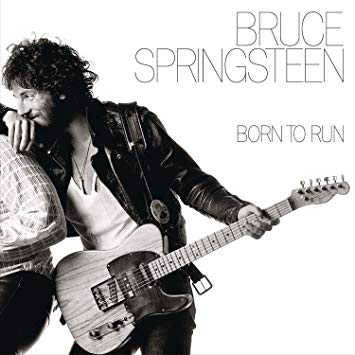
The guy on the cover looked more masculine than any rock and roller I have ever seen (except for the guys on my brother’s Bachman-Turner Overdrive album). His hair wasn’t down over his shoulders like John Lennon or Steven Tyler, but long enough. He wore a leather jacket–something I always wanted but felt I would look stupid in one. To use a current idiom: “He rocked that jacket.” He had a more serious-looking guitar than most rockers–no flames or sunburst finish. It meant business. He wore the “axe” with absolute confidence–as if he was born with that chunk of wood, wire, and nobs on him. I took guitar lessons in my freshman year and–just like Ceramics–I ended up dropping out. Finally, he wore a warm smile for the guy he was leaning on—a big guy playing a saxophone. It was as if the white guitarist was sharing a private joke with the Black saxophonist. I didn’t have a friend I could lean on as Bruce Springsteen seemed to have with his Clarence “Big Man” Clemons. Bruce Springsteen was everything I was not but wanted to be, and his sound–at least to my untrained ears–was unique and very macho. A final note about the cover was that it might have been the first (and the last time for a while) I saw a Black man and a white man together on a rock and roll cover.
Marc said something about the bell ringing and having to go to the next class. If I felt I could talk him into it, I would have asked if I could lock up behind him and listen to the entire record. Anyway, I was doomed to drop out of the next period I was supposed to attend. Another thing, this album had printed lyrics! It was the first time I ever saw lyrics on an album. (I would later discover my sister’s copy of The Beatle’s 1967 Sgt. Pepper’s Lonely Hearts Club Band had lyrics printed on the back of the album, but that was the only album I ever knew about that predates Born to Run.) Printing the words to the songs was a validation of the artist’s seriousness–the words were right in front of the listener. It was a confident, no-bullshit move for its time, I would think later. It was an entirely new experience in listening to music, and I wanted more of this stuff. Over the years, I would tire of the album, especially the title track, due in part to playing the hell out of it and hearing it on the radio. (I would never tire of “Thunder Road” and “Tenth Avenue Freeze-Out.”) I was on my third copy of Born to Run when I traded it and all my other records in for classical Compact Discs (CDs). Looking back on my eleven years of listening to rock music, I am sure Born to Run was not my favorite. Still, I played no other vinyl more than that album. It was the gateway to a short, but intense time of music appreciation and criticism.
This post is about my brief love affair with music: my hero-worshiping of a lovable guy from New Jersey, my obsession with LP collecting, my interest in reading, and writing about music, late-night skanking with a college buddy and a local band. This post is also about mosh pits, flying loogies, and a skating rink-turned ball room and now hallowed concert hall where this blogger saw two unforgettable concerts. This post is also about listening to music, sometimes at the expense of friends, family, and wait staff. Finally, this humble post is about leaving all this stuff behind.


1976/77, Disposable Income and Tower Records: Becoming an avid record collector.
Before my first regular job at Taco Bell, I rarely had any money to buy vinyl. There was lawn-mowing money, but that opportunity dried up after I became allergic to cut grass. My father’s shop had occasional jobs, but that didn’t happen often. Also, I rarely spent my money on records when my dad paid me. The Christmas season always brought with it Tower Records gift certificates. The yellow and red money order-sized card stock bills seemed like the golden tickets in “Willie Wonka & the Chocolate Factory.” Not only was it free tender, but it also freed me up from deciding what stuff I would buy with them–either music or books. I can remember when I was around twelve when my big sister–trying in vain to talk me into buying The Rolling Stones compilation album Through the Past, Darkly. She had designs on listening to the Stones’ record. I ended up using my certificate on The Beatles’ Abbey Road. Both LPs were in the New Releases section. That makes this event occur in 1969-70. The Beatles were still a band (if only on paper).
In 1976 came a driver’s license, a car, and my Taco Bell job, and with the regular paycheck, disposable income. I also had a few friends who liked rock music. Collecting records started slowly: Boz Scaggs’ Silk Degrees, Tom Petty & the Heartbreakers’ debut album, Bad Company’s first two records, Boston’s debut album, Thin Lizzy’s Jailbreak. I also enjoyed a lot of the stuff my friends listened to, and I didn’t listen to music at the interpretive level. I was more interested in soaring guitars, bad-ass drum solos, and androgynous screamers like Robert Plant and Steven Tyler. It was all very white, hard-rockin’ stuff. Then there were peers’ “suggestions,” like when this loud-mouthed bully at school hassled me for going on about how cool Dark Side of the Moon was. He said something like, “Pink Floyd hasn’t done shit since Meddle.” I took a chance at this jerk’s suggestion. (This wasn’t the same as blowing a golden ticket I only got in December–I now had the cash to take chances on an asshole’s opinion.) After only a few spins of Meddle, I filed it next to my other two Pink Floyd records (the other being the exceptional Wish You Were Here). I didn’t like Meddle much when I first got it, but by 1978 or 1979, I was playing the hell out of it. Around that time, I would pick up Animals which was my least favorite Pink Floyd album in my collection, but I still liked very much. Imagine my disappointment after playing The Wall a few times. I found it full of itself (save for the monumental “Comfortably Numb”). By the time I sold off all my LPs, I still hated that album and the horrible film based on the album: the 1982 Alan Parker film “Pink Floyd: The Wall.”
1978, Winterland: The Sex Pistols, Bruce Springsteen & the E Street Band
In late 1977, I got a job at Florsheim Shoes, where I was reacquainted with an old childhood friend, Rick, the manager. We became best friends. On January 14, 1978, we were working in the shop, and he said something like, “Hey man, let’s go check out The Sex Pistols. They are playing at Winterland tonight!”
The only thing I knew about The Sex Pistols was that they were a “punk” band, whatever that was. I hadn’t heard one note of punk music. Of course, my idea of punk was narrow then; I assumed it was purely a British phenomenon. I was unaware it (arguably) started when Patti Smith recorded her brilliant debut album Horses only a few months after I was sitting in the Rio AV room, having my mind blown.
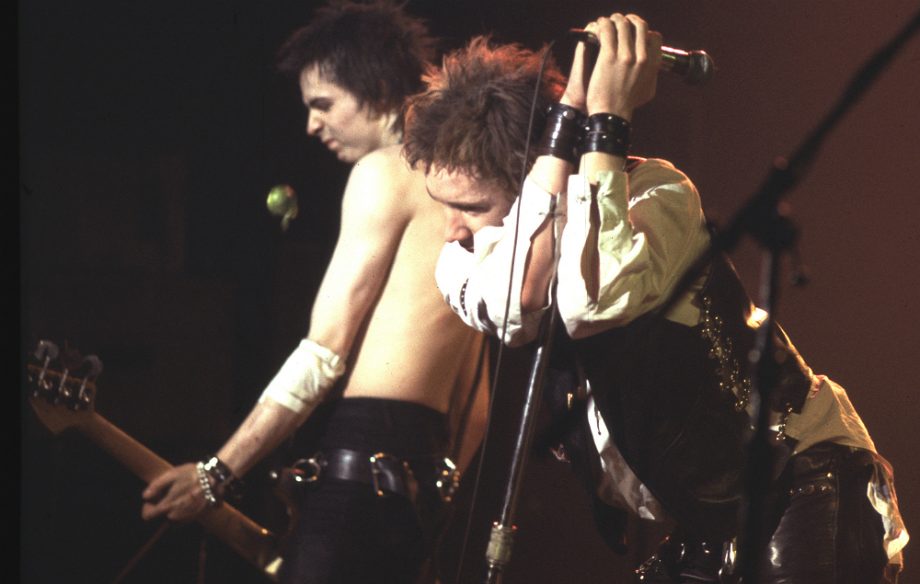
Rick and I hopped in my VW Scirocco and stopped by a convenience store where Rick bought a bottle of Bacardi 151 and a six-pack of Dr. Pepper. As we flew across the Yolo Bypass to San Francisco, Rick handed me a can of Dr. Pepper to drink halfway down. Then he filled the half-drained can with 151 and started drinking. The next day at work, I couldn’t stop talking about the concert. The flying bottles, the guitar that perpetually sounded like a DC 10 was about to crash into the building, the obscenities the crowd hurled at the stage, and this Johnnie Rotten guy sending them right back to the crowd amplified and that moving, jumping mass of humanity directly in front of the stage was nothing I ever experienced before.
I recall Rick writing the evening off as some aberration, but I kept thinking about how different the music was. At the time, I couldn’t articulate my feelings–that it was an insurrection from the status quo. The status quo is bands like The Who–the guys that sang, “I hope I die before I get old.” This stuff pushed the boundaries even farther than The Who and Led Zeppelin. Rick drank so much that that evening, the concert was a blur to him. But my ears were now open (and still ringing). I had to check out this punk thing. It was a hell of a lot “badder” than Bad Company or Badfinger!
Sometime after The Sex Pistols concert, Rick turned me onto Rolling Stone magazine as well as the popular culture critic Greil Marcus. At this time, I started collecting records in earnest: two or even three a week. I had a method: I’d buy a relatively new release that sounded good on the radio or got a favorable review in Rolling Stone magazine. (Back then it would have been albums like The Rolling Stones’ Some Girls, Elvis Costello’s This Year’s Model, and The Clash’s Give ‘Em Enough Rope.) I’d also buy a classic I had read about e.g., Elvis’ Sun Sessions, Marvin Gaye’s Let’s Get It On, “The Harder They Come” soundtrack, and most of Bob Dylan’s catalog stopping at 1976. My curated record collection grew to the point I needed a bigger container for my music, then another big box, then another. And to match the ballooning size of my music reserve was my insufferable, superior opinion of rock music.
Another friend I had around this time was Matt, an affable guy who, unlike Rick, wasn’t arrogant or judgmental. Looking back on my friendship with Matt, I realize I was quite the backstabber. Matt liked bands like REO Speedwagon, Styx, and Journey. He also liked The Bee Gees and to be fair, so did I. I had Main Course and the soundtrack to “Saturday Night Fever,” but I didn’t play them much. Also, I wouldn’t be caught dead with a Styx or “Oreo Speedcookie” album in my collection! So, like a piece of shit, I criticized Matt’s taste in music to Rick. Looking back on it now, Rick could be cruel and judgmental towards me like he was towards Matt and our other friends. Matt was always warm and accepting. I fancied myself a burgeoning rock critic and would soon start submitting music reviews for my college paper, but my ego was way ahead of my chops. While I was adventurous when it came to music outside the mainstream. I listened to (bands like The New York Dolls, Robert Johnson, Parliament-Funkadelic, Howlin’ Wolf, Hank Williams, Sr., Run-DMC, and Phil Ochs, I wasn’t very adventurous when it came to mainstream Top 40 stuff. Admittedly, that was my Achilles’ heel as a future professional critic. I would have found something redeemable in a band like Styx. I’ll never know now, but I can’t change the dial fast enough whenever I hear the opening bars of “Lady.”
In December of 1978, Rick told me Bruce Springsteen was playing at Winterland. Bill Graham was closing the old concert hall best known for The Band’s final concert (immortalized in Martin Scorsese’s 1978 film, “The Last Waltz.” Springsteen agreed to swing back around from his Darkness on the Edge of Town tour to honor the place with two concerts. I think I was so into punk/New Wave at the time that I hadn’t gotten around to buying the new Springsteen LP despite how much I loved Born to Run.

As Rick and I made our way to Winterland, we were booze-free, thankfully. What happened in that run-down old skating rink on the night of December 16, 1978, was the greatest concert–by far–I would ever experience. As it turned out, the night before, the band put in a performance so incredible that the bootleg recording of that night’s show is supposed to be one of the greatest live recordings in all of rock history. I didn’t see that one, but the next night’s performance nearly ruined concert-going for me—no other concert after that ever came close to it, including the two other Springsteen concerts I attended later on.
I am sure I bought Darkness on the Edge of Town the next day and played it every day for many days. Even with its flaws, the album became my all-time favorite record (until I discovered The Clash’s 1977 debut album a little later). Whatever it was, I couldn’t stop listening to or reading about Bruce Springsteen. Even after I abandoned rock music, I still–even to this day have a YouTube channel of the artist to see what’s up with him. I’m not always impressed with what I see/hear, but since I am post-pop it doesn’t get me down.

1980 and beyond: listening to, reading and writing about music.
After Darkness on the Edge of Town, I became more secluded than I was before. This is significant since I was always a loner and a daydreamer–lost in my own thoughts. Now, I would spend hours every day listening intently to music at the expense of everything else. My family and friends could attest to my wandering off from conversations. Think of a millennial looking down at their smartphone at the expense of what’s going on around them. That was me. I have always been a loner and have shopped, seen films, and eaten out alone far more times than with company. So, this kind of activity on the outside was nothing new. Suddenly, Sam Cooke singing “A Change Is Gonna Come” could snap me out of the rare one-on-one conversations I might have in a public place.
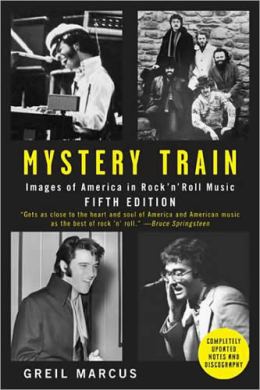
Another byproduct of all this record collecting and interpretive listening was my interest in reading about popular music. I became absorbed in popular culture, the 60s counter-culture, Dylan, and the stuff that came before them like Elvis. I also became interested in popular music criticism. I read Greil Marcus’ brilliant “Mystery Train,” Julie Burchill and Tony Parsons radical “The Boy Looked at Johnny,” and perused guides like “The Rolling Stone Record Guide.” I also thoroughly read Robert Christgau’s “Rock Albums of the Seventies.” I read the entire 480-page guide to get the hang of the critic’s style, which I never achieved. Part of the impetus for spending time reading about music was to get suggestions on more albums to buy (as expressed earlier). Another reason was to develop a critic’s parlance or an authoritative voice when it came to conveying my opinions on

songs, albums, concerts, artists. I picked this up from my friend Rick. I admired how he could carry a conversation about music or film with authority, even when talking about a band or a film he liked, and I didn’t. I wanted to speak that way. I also wanted to write the way critics wrote. I followed Rick to American River College’s newspaper, The Beaver (now American River Current), where I became the Entertainment Editor. I was now going to The Talking Heads, Devo, The B-52s, and Iggy Pop concerts, to name only a few–many of them on the college’s dime and writing reviews of the performances. I also wrote record reviews, not to mention film reviews for the campus newspaper. I struggled to express myself. Ultimately, I didn’t achieved my goal of being a professional music critic.
One thing I didn’t struggle with was my self-indulgence. When my father brought home the first Macintosh, I used the new tool to catalog my record collection. Soon after finishing my inventory, I would rate each album using “The Rolling Stone Record Guide” five-star rating system. A few years after that, I would dump the computer–for some reason–and catalog my swelling collection by hand, now using my own ten-point rating system. Both the computer-generated and handwritten inventories are lost to time.
1981, CSUS and around town: Following Mod Philo with Nolan
Shortly after I transferred from American River College to California State University, Sacramento (CSUS), I joined the campus newspaper (The Hornet). It was there that I met Nolan. Nolan and I had one specific thing in common: we loved music, especially ska. We were both crazy about The English Beat. He told me about a local ska group called Mod Philo (presumably short for Modern Philosophy, whatever that means). I remember going with Nolan to one of their gigs.
My hopes were not set high. I attended many punk concerts with headliners like X, Black Flag, and The Blasters. They were all outstanding, but the local bands that opened for them were laughably bad. I figured Mod Philo would be the ska version of this local punk group. When I finally saw them, I was impressed. I got this feeling whenever we saw them that these guys would land a recording deal. We went to many of their shows where we would “skank.” I couldn’t tell you how to skank now, but I recall skanking all over the place while listening to Mod Philo back in 1981. The great thing is, like slam dancing, you didn’t have to ask someone to dance with you. At twenty-five, I rarely dated and was hopelessly intimidated by the opposite sex. So, I loved that I could skank with myself and not look like a loser–everyone seemed to dance with no one in particular!
Like nearly all relationships in my life, Nolan and I went our separate ways, and I never heard from Mod Philo again until I noticed someone posted one of their songs on YouTube. At any rate, it was a short but sweet time skanking to some good local music with a friend.
1980-1984, Galactica 2000/Second Level/Club Can’t Tell and two kinds of heatwaves.
Through the early- and mid-80s, I continued collecting new and classic rock/soul/R&B/folk records as well as albums that were critically acclaimed but were dark horses when it came to viability and sales. How many readers can say they listened to Graham Parker’s Howlin’ Wind and Heat Treatment? With little doubt, two of the best albums to come out of the 70s and utterly ignored by everyone except the critics (and people who read the critics). What I remember about this time better than the albums were the concerts.
A few punk rock enthusiasts who used to work at the Tower Theatre with me took me on to a local club at 15th and K Streets–now the Capitol Garage restaurant. Galactica 2000 was an old disco club-turned-punk palace. If you are from around Sacramento, think of it as the Ace of Spades of the 80s but with a big spinning disco ball in the middle twirling over the mosh pit. Because New Wave was new, even the best bands (or at least the most popular) in this genre played in small markets like Sacramento. Incredible bands like X, Black Flag, The Blasters, X-Ray Spex, Gang of Four, The English Beat, The Germs, Public Image LTD, The Talking Heads, Devo, and The B-52s all played small venues in Sacramento and neighboring Davis.

I rarely attended concerts that weren’t punk, new wave, or alternative during this period, and I’m not sure why. One non-alternative rock concert I couldn’t pass up was a Motown revue at Hughes Stadium sometime in the early 80s. It was a warm, cloudless day when I sat down around the 20-yard line to watch a series of gray-haired and balding legends do their best to bring us all back to the Golden Age of Motown. We all got to see The Four Tops, Martha & the Vandellas, and, I think, The Temptations and Gladys Knight & the Pips. Two of my favorite groups were missing: Smokey Robinson and the Miracles and The Supremes. Unfortunately, the most memorable thing about the concert was that I failed to bring sunblock or a hat for my balding head. So, while Martha Reeves, twenty years after recording “Heat Wave,” still blew the doors off Linda Ronstadt’s cover, my scalp had a heatwave all its own. My dome was so severely burned that it had blisters.
One of the last shows I attended at the Second Level venue was Jonathan Richman & the Modern Lovers. I covered the show for The Hornet. I had seen some rough groups at The Second Level (nee Galactica 2000) and had come to expect rockin’ shows. While I knew Richman had changed his act since his proto-punk debut, I expected something beyond the G-rated style he had adopted since retooling the once seminal band. Now I was watching a group inadvertently featuring Richman’s toddler son walking precariously on the stage to music that sounded like it was composed, arranged, and performed for him–the audience was an afterthought. When I interviewed Richman after the show, I asked him why he no longer played songs from his first album The Modern Lovers. Richman said he still did, but never “Pablo Picasso,” checking to see if his son was within earshot then finishing, “because it has the word ‘asshole’ in it.’” Looking back on it now, with the toe-headed cutie tottering around the cables and (presumably) Richman’s wife frequently pulling junior off the stage while the band plunked away, it seemed like an absurd coda to my Galactica 2000/Second Level days. At the time, though, I was hoping for more “Roadrunner” and less “Dodge Veg-O-Matic” out of the show.
1985, The Completist: Beethoven and the beginning of the end
In the fall of 1985 my girlfriend, Judi, bought me a couple of classical CDs. They were Otto Klemperer and the Philharmonic Orchestra’s recordings of some Beethoven’s Symphonies; I think Nos. 3 & 4 and 7 & 8. Before hearing one note from either of these recordings, nae before I began the arduous task of removing the rapping from the poorly designed jewel cases (one of my regrets for not sticking with vinyl!), I remember thinking when was I going to go out and complete the set: 1, 2, 5, 6, and 9. “I can’t help it, I’m anal,” as Woody Allen’s character says in “Annie Hall,” or maybe a better way of saying it is that I am a completist. About eight years previous–when I started buying Beatles albums–I spent my taco-stuffing paychecks buying up the twice as expensive British EMI recordings of The Beatles albums from the import section of my Tower Records. No way was I going to buy the chopped up, Capitol Records versions of the early Beatles albums. They weren’t the original Beatles albums (at least not until Rubber Soul onward). So, I felt compelled to collect all nine Beethoven symphonies. Later, this completist thing would later drive me to purchase all nine Mahler symphonies, all nine Bruckner symphonies, all four Brahms symphonies, and other full sets of music. Thankfully, the completist thing was not a complete obsession (pun in place) or I may have gone broke buying all forty-one Mozart symphonies and all 106(!) Haydn symphonies, and so on. Still, there were complete piano concerto series of big-name composers to buy; the same goes for violin concertos. When my classical music thing took hold I would purchase all of Beethoven’s String Quartets: all three periods–hours of listening. The music was so intense–especially the late period of quartets–that I barely scratched the surface of them. As with Beethoven’s monumental Symphony No. 9 in D minor, the last period of string quartets was composed when Beethoven was stone-deaf. And I thought it was miraculous that a blind man could create such works of genius as Innervisions, Talking Book, and Fulfillingness’ First’s Finale.
It was around this time my good friend Jimmy began inviting me to Sacramento Symphony (now the Sacramento Philharmonic & Opera) concerts. Since Jimmy had obsessive compulsive disorder, he bought two season tickets for the worst seats in the house to ensure that no one would sit near him and add to his anxiety. So, he offered me the other ticket if I sat somewhere else on the empty upper balcony. It was up in the nosebleeds where I was introduced to many classical works without me having to shell out a shekel.
Judi’s occasional classical CD gifts and Jimmy’s free classical concert tickets ended up being an unintentional conversion therapy from a die-hard worshiper of Springsteen and The Clash to an enthusiast of Bach, Beethoven, Mozart, Mahler, and indirectly, the Minimalist masters (Philip Glass, John Adams, Steve Reich, etc.). I didn’t know it at the time, but in September of that year, I saw one of my last rock concerts. A bunch of guys from work bought tickets to see Springsteen at the Oakland Alameda Coliseum. We were on the second deck between home and third base. The stage was in center field. The intimacy I felt during the Winterland concert wasn’t present here. Bruce put on a good show, but I knew it wasn’t that magical to my friend Gerry when he commented after the show that it wasn’t as good as the Kenny Loggins concert, he saw recently. (Kenny fucking Loggins?!) Shortly after the Springsteen show, I was at the Unitarian Universality church on Sierra Blvd near Howe Ave listening to some incredible 20th Century chamber music performed by the Kronos Quartet, a group I liked so much that I went out and bought nearly their entire catalog. The conversion was in full swing.

I don’t remember the cat at now-defunct Records, only the overbearing smell of mildew.
1986 and Beyond: “The Standard Repertoire,” Jazz, and the mysterious case of the Swordfishtrombones LP
I was still single and dating Judi when, in early 1986, I traded in my entire curated collection of well over 400 albums of rock, soul, and folk vinyl for store credit at Records–a now-defunct used vinyl, CD, and video store on K Street here in Sacramento. I would use the store credit for building my classical music collection. At first, I exchanged in piecemeal and then later by the cases. I recall asking the store owner, Ed Hartman, for the use of his hand truck as I started trading LPs for credit en masse. Hartman was impressed by how I kept my vinyl in such pristine condition. He stopped examining my vinyl after the first dozen or so. I proudly told him all the records were in the same excellent shape save for an out-of-print copy of The Kinks Greatest Hits (1966). At the time I bought it, it was the only album I could get that had all the early great songs without all the shit that usually comes on Kinks albums.
I can’t give the reader a logical reason why I decided to trade in all my entire once-cherished album collection. Rock & roll didn’t break my heart or betray me. It didn’t laugh at my penis size or tell me it was leaving me for another listener. For that matter, classical music didn’t seduce me into dumping all my rock albums. I could have kept all those albums and continued what my girlfriend started–buying classical CDs and a rock album from time to time. (I shudder to think of how many recordings I would have right now if I kept all my records and continued to buy albums. While I am sure married life would have slowed my acquisition pace, I still think my house would look like a used record store. I’m reminded of Rob Gordon’s record collection in one of my all-time favorite films, “High Fidelity.”
Even if I kept buying popular, classical, and jazz albums, it would be at a significantly slower pace. Also, my wife and I occasionally thin out our books, which we accumulate at a fast pace even though I usually listen to audiobooks, and she often reads books from her Kindle. It would make sense we would pare down the music collection occasionally. Still, I haven’t answered the $64,000 Question: why I decided to end a relationship I was so passionate about only a year or two previous. The answer is lost on time.
What I got in exchange for all my old LPs was a new, albeit shorter-lived new passion. Besides classical music, I also bought books on classical music, started listening to the local PBS classical station, and just like with rock music, I became interested in what the critics had to say. I religiously listened to The Record Shelf with Jim Svejda. I became enamored with listening to and collecting classical music. I was also hell-bent on buying up titles from the “Standard Repertoire.” The Standard Repertoire is a body of work that varies depending on which person you ask. It contains the best works by famous composers (J.S. Bach, Haydn, Mozart, Beethoven, Brahms, etc.). It also includes outstanding works by some “one-hit wonders,” to borrow a pop music idiom. (Though I doubt Karl Orff would like to be referred to as a “one-hit wonder,” his Carmina Burana is a widely acknowledged masterpiece, while his other work never reached that critical success.) It is what the above word “best” means that makes the Standard Repertoire seem at times arbitrary: all the Beethoven symphonies are pretty much bolted down, but some sticklers would have only Nos. 3, 5, 6, 7, and 9 in the pantheon.
Just like my fictitious alter-ego Rob Gordon, I’m obsessed with lists. The Standard Repertoire was made for someone like me.
Then there are the actual recordings–the various interpretations of, say, Beethoven’s 9th–some great, some good, some horrible. Mozart’s catalog is immense, and it is impossible to get critics to agree on which specific recordings of, say, his Symphony 41 in C major, k 551 is the current best recording. And don’t get me started on the whole “period instruments” thing. I quickly found out–no matter how full of shit I was as a “rock critic”–this stuff was far too dynamic, far too sophisticated, and intelligent for me to just switch tracks from “Louie, Louie” to “Eine Kleine Nachtmusik” without, what felt like, a degree in music theory. But I didn’t know all of this at the time I started collecting classical music. Who knows, I would have stuck with classical music (or jazz for that matter) if I didn’t dive into the stuff as if I thought I was going to understand it like I understood rock music. What I mean is, when I was collecting rock LP’s, I patronized a used record store on Douglas Blvd in Roseville, California. I think the owner saw through my arrogance when we would have a friendly argument about The Grateful Dead (I didn’t like the band, he loved them). The same goes for The Clash (I thought their debut album was the greatest rock album of all time, he thought of the band as just another punk band). The thing that annoyed him was how I tried to over-analyze music. He would smile and say something like, “Just listen to it, man!” Years later, when I was struggling to understand classical music the same way I thought I understood rock music, his words would come back to me. I finally relented. I should have done so years ago.
A short time after selling off all my LPs I broke up with Judi and started dating Carol, the woman who I would marry about a year later. She was disappointed that the man she knew as a friend (who had hundreds of rock albums), now only had a fraction of that amount in classical music CDs. I had become a bit of a wannabe classical music expert, lamely attempting to “Name That Tune” whenever the opening bars of a familiar symphony or concerto came over the radio. “Ah, Mozart’s ‘Horn Concerto No. 1.’” Then, about ten minutes later, long after Carol forgot I was talking about the music on the radio (that’s if she was ever listening to me in the first place), “No wait, that’s ‘Horn Concerto No. 3.’ Yeah, I knew it was an odd number.” Or the concerto would finish, and I’d find out it wasn’t a Mozart piece at all. No need to be humble about this gaffe, Carol stopped listening to me minutes ago. She didn’t mind the classical music I played in her apartment; she just missed the old rock and roll maven.
The stories behind many of the rock concerts I told her about had comedic elements that I used to court my mate. There was the time Dee Dee Ramone nearly crushed my hand. Then there was the time the Dead Kennedys opened for The Clash and singer Jello Biafra dove into the mosh pit where the crowd of unruly punks stripped him naked only to have the roadies pull him out in time to finish the song buck naked. And the time Iggy Pop hocked a big green loogie into a UC Davis crowd and it landing on some preppy’s cardigan in front of me, where it stayed the whole performance inches from his face. I love describing the look on my friend Paul’s face (who listens only to musicals) the night I took him to see the band Fear. His jaw dropped on seeing the mosh pit, and the dumb opening acts with their monotonous music. Then the main act with the band’s long-haired biker-sized roadies flanking the stage, catching punks attempting to stage dive and tossing them like dolls off the sides of the stage where there were no soft bodies to break their falls, just instrument trunks, mic stands, and the unforgiving cement floor. And, finally, serenading my love by the retelling of The Sex Pistols concert. Some of these stories I still whip out from time to time, and my wife to this day continues to laugh at them. Good marital bonding stuff, even after 35 years. There’s no stage diving at a chamber music performance, no loogie hocking by the conductor or concertmaster during an orchestral piece. Besides listening to traditional classical music and tuning into The Record Shelf every Sunday, I was also listening to a lot of minimalist music. This stuff didn’t go over with the girlfriend/fiancé/wife. Shortly after our wedding, I stopped going to classical performances. A few years after that, I ended my pursuit of buying classical music. I was doing the domestic thing with her and her child, now my stepson, Peter.

A good start for anyone who wants to sample jazz.
I don’t remember how many months went by without aggressively listening to classical music, but I decided to listen to jazz for some unexplainable reason. And just like rock and classical, and for that matter, chess, baseball, and much later, scooter culture, and yoga, I can’t seem to ease into a new thing: I become very focused, buy books on the subjects, etc. And that’s what happened, again, with jazz.
I started collecting jazz CDs, listening to KXJZ, buying some books on the art and even looked, in vain, for a “standard repertoire” in jazz recordings. Purchasing and collecting recordings were not in the same passion and WORD. (And the same could be said about collecting classical recordings compared to collecting popular music. Also, unlike rock and classical I never attended a jazz concert. In films the performances were always in bars, which isn’t my scene. I’m sure I could have attended jazz concerts (they do exist), but I was losing interest so fast that I never looked into seeing any artists. I liked John Coltrane, Miles Davis, Thelonius Monk, Duke Ellington, Charlie Parker, Billie Holiday, Bennie Goodman, Count Basie, Dizzy Gillespie, Dave Brubeck, and some others.
Full disclosure: some of these artists and a lot of others not listed were in compilation albums like The Smithsonian Collection of Classic Jazz. Right out of the gate, I was getting into compilations, and I wasn’t even embarrassed. Also, I wasn’t reading about jazz like I tried to learn with classical music, and I voraciously read about popular music. It was as if I knew I wasn’t going to be interested in jazz for very long: I wasn’t investing in time, money, or passion as I did the other forms of music. Then again, it was the wise words of the used record store owner coming back to me.
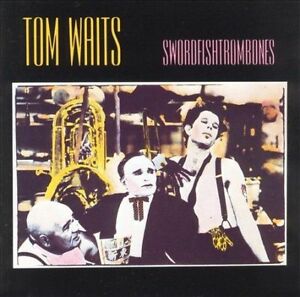
Tom Waits meets Trout Mask Replica with album art reminiscent of Tod Browning’s “Freaks.” I guess I liked this album, if only I could remember it.
Sometime in the late 1980s, I was rummaging through some stuff I had at my parent’s house when I found two rock LPs, I never got around to trading in Springsteen Live 1975/1985 and Tom Waits’ Swordfishtrombones. The Springsteen box set was a gift–I didn’t ask for it, and–except for the powerful cover of The Temptations’ “War”–I didn’t play it much. I rarely used my turntable by the time I received the Springsteen live collection. The existence of the Waits record in this near-empty box perplexed me, though. It may have been the last popular music album I ever purchased before cutting completely over to classical, but I could barely remember buying it and listening to it. Also, I knew I didn’t have any other titles by Waits in my long-gone collection so; to buy this album so late in the game was strange. Swordfishtrombones was probably the climatic milestone to a decade of loud music, hopes & dreams, late nights, and vinyl, plenty of vinyl. If my guess is correct, it was a strange coda to my popular music record collecting considering I wasn’t a fan of Waits. I’m not sure what my first album was. Perhaps it was the Abbey Road album I disappointed my sister by buying, but I’m almost certain Swordfishtrombones was my last. At the time I found the album, I no longer had a turntable so I couldn’t play the songs for clues to why I bought it. The best guess I have now is how critics compare this album to the better works of Captain Beefheart–an artist I liked (and all my friends unanimously hated.).
Married life brought rock music back into my life if only a little and indirectly. Carol bought me Springsteen’s Tunnel of Love in 1986. She also bought us tickets for a U2 concert the same year at the Oakland Alameda Coliseum. I figured that this show would be the last rock concert I would ever attend, but it wasn’t. Nor would the Waits album technically be the last rock album I would buy. Carol would tire of the classical music and jazz I was playing. She wanted some rock music in our new house. I had been out of the popular music scene for so long that I needed help with what albums to buy. I asked my friend and fellow blogger, Chip, for some help. (Check out his blog here. He’s still into popular music.) Chip suggested I buy Matthew Sweet’s Girlfriend and Lenny Kravitz’ Let Love Rule. About ten years after those purchases, I installed the new iTunes onto the family’s new computer. I was purchasing rock music again, but this wasn’t a complete revival. Most of the time, I was buying nice-sounding elevator music. I just didn’t care for the stuff as I did fifteen years previous. Also, the old rock and roll “critic” had some misgivings about the iTunes concept: buying singles from albums that were meant to be played in album format. It was as if Apple had created a big Compilation Album Making Machine. Steve Jobs admitted as much in the authorized biography by Walter Isaacson, where he enjoyed hacking up Dylan albums to create his own mix (with not a cut from Empire Burlesque, as readers of the bio know all too well). It would be more generous to call iTunes a Mixed Tape Maker. (Everyone loves mixed tapes, right?) But I didn’t care anymore. I wasn’t listening to the music–it was now just background music to whatever I was doing on the computer. These days, if I purposefully listen to music at all, it is usually rock or folk on Pandora at work. I know there are much better apps out there than Pandora. That’s how much I don’t care. Still, I can thank Pandora and Springsteen’s YouTube channel for enticing me to buy, via iTunes Springsteen’s The Rising and We Shall Overcome: The Seeger Sessions albums and watching the cringe-worthy “Springsteen & I,” the fascinating “The Promise: The Making of Darkness on the Edge of Town,” and his nearly bloodless Broadway show on Netflix.
Recently, I attended two shows in my post-rock or post-music days. I saw an excellent Springsteen concert at the Oracle Arena in 2012 and a respectable if not inspiring Black Flag concert the following year at the local Ace of Spades with my 23-year-old son, (who kept muttering in wonder, “I can’t believe I’m at a Black Flag concert with my dad”). I didn’t pursue tickets for either of these shows. They, figuratively, landed in my lap. Otherwise, I wouldn’t have attended either event. The funny thing is while writing and rewriting this post I started looking into local live classical music–the Sacramento Philharmonic and the Sacramento Chamber Music Society. I’m also looking into the Kronos Quartet hoping–probably in vain–to see if/when they are touring near the Sacramento area. I don’t know how long this feeling will last, though.
2019, Oblivion Comics & Coffee: coffee and trying not to care about what comes over the speakers
I’m having my morning coffee at Oblivion Comics & Coffee one of my current haunts, an ingenious combination of a comic bookstore and coffee house. I like graphic novels, but, my tastes are eclectic–too eclectic for this store that mostly sells superhero titles. But I order the graphic novels that interest me through this store after I have discovered them online. As for the coffee, I’d prefer to drink the higher quality, Fair Trade stuff down the street at Temple Roasters, but this place is right across the street from my job. My taste in coffee and espresso is not as discriminating as I wish it to be.
I’m in my 60s and decades past the time I took rock music so seriously, but there are still remnants of the old snob. (At my age, the appropriate noun is “grouch.”) Earlier this place played an inventive cover of an 80s song I recognized but couldn’t name. No matter, I think to myself, these days the only things I listen to are audiobooks and left-wing political podcasts. Then I heard “More Than a Feeling” from Boston’s debut album. An album I acknowledged to be excellent, but I grew to hate by the early 80s due to radio saturation. I haven’t heard it in years except here, where management plays it too much. (If they’ve played it twice in a week that’s too much for me.) It’s as if I’m back in the 80s again. That’s what I get for hanging out here so much. Why don’t they play a Van Morrison album like Astral Weeks, Moondance, or my favorite, Into the Music? (Yeah, I know, they’re all old ones.) How about the song “Tempted” by Squeeze or what about some Los Lobos! I was reminded of what a fun song “Last Night I Got Loaded” is when I was watching a bunch o drunk minor leaguers have fun on a muddy baseball diamond in “Bull Durham,” a film I saw the other night for what might have been the tenth time. Shut-up, Jack, you old crank! You haven’t been passionate about popular music in thirty years, why should you give a shit what plays on a restaurant’s stereo, anyway. Oh no! Now the stereo is playing Foreigner’s “Jukebox Heroes.” Come back Styx; all is forgiven!
2023, a Newer Postscript
As the new millennium progressed, my classical music listening waned, and all my listening continued with spoken word formats. I hadn’t attended a live concert in I can’t remember how long (ten years? The Pandemic and the shelter-in-place mandate put the kibosh on any of those activities, even if I was interested which I don’t think I was.
About the same time, I retired, the mandate had lifted, and I suddenly got the wild hair to start attending concerts again. Also, it didn’t hurt that the old Sacramento Convention Center had been replaced by the shiny new mouthful Safe Credit Union Performing Arts Center. It was exciting to get back into watching live orchestral music, and this time up close—no more viewing from the altitude my old friend Jimmy and I used to experience the old Sacramento Symphony performances.
A fellow retiree I have coffee with every week or so invited me to The Camelia Symphony, the other orchestra in town, which performs in my neighborhood! Finally, I got reacquainted with the Chamber Music Society of Sacramento. So, I have attended at least seven live concerts a year in the last three years.
The music snob comes out in me during some of these performances–mostly during Sacramento Philharmonic and Camellia Symphony performances. What sounds like a great many of the audience insist on applauding after every movement of each multi-movement work. It shocked me to find when Violist.com took a casual poll on whether the audience should be asked not to applaud in between movements, the vote was closer than I would have guessed. However, this doesn’t mean whether or not people who voted “No” would usually applaud. The article has some interesting things to say about this phenomenon. (Though this old bald fat man thinks it’s more like a plague!)
Who’s the only one not applauding after each movement? Check out the old bald fat man in the lower orchestra section, hands clenched, shooting daggers at his fellow audience members as they gleefully clap like seals at Seal World, ignore the importance of the silence between each movement. (Silence is also important between each note, but I bet if they had the chance to clap between every note they would!) Silence is as much a part of music (experienced live or recorded). I’m reminded of the late American composer John Cage’s 4:33. Cage goes to this length to hammer the point home. Somewhere in my collection of music, I have a recording of Frank Zappa doing 4:33 for Piano but see the Berlin Philharmonic perform 4:33 with a full orchestra!
Oh, but I must be boring you by now with this didactic diatribe about silence and clapping. So, let me finish where I began. Not the Born to Run part, but the part where a kid is standing in Tower Records in 1969, holding his ground against his sister, who wants him to use his precious gift certificate to buy a Stones album instead of Abbey Road. Or we can go further back to 1964 when the young boy was at his grandparents’ house and The Beatles were first on The Ed Sullivan Show. Or a few years later, when the boy bought Beatles singles (most notably Strawberry Fields Forever/Penny Lane) and he would toss the sleeves thinking they were like wrapping paper. Or maybe fast forward from there to the 1980s, and he’s buying the complete Beatle catalog from the EMI recordings of Please Please Me through Help! Then the Capitol recordings of Rubber Soul through Let It Be. Or we can finish a couple of years ago with Peter Jackson resurrecting fifty-seven hours of lost recordings and bringing the Fab Four on the TV screen over fifty years later. Jackson retold Lindsay-Hogg’s lackluster “Let It Be” (1970) and revitalized the penultimate Beatles recordings into a masterpiece of technology and a labor of love. Since Abbey Road was probably the first rock album I ever bought, and I was a Beatles fan of one capacity or another since they first appeared on TV, it was my own personal labor of love watching Jackson’s 2021 documentary “The Beatles: Get Back” two full times and the last two hours of the 7 hours, 48-minute masterwork two or three extra times. To this day, I still watch YouTube clips of the film.
Jackson had a hand in creating the first “Beatles song” in over fifty years, but “Now and Then” is no “Day Tripper” or “Yer Blues.” And here he is, dear readers, the old rock critic rearing his opinionated head again. Old habits die hard, I suppose.
If you haven’t seen it yet, shame on you! Get a trial Apple TV+ subscription. After you’ve seen this epic doc you can cancel your subscription, but try to squeeze in “Ted Lasso,” “Severance,” and “The Morning Show,” before the trail period is up.

 BURGER SCOOT
Leave a comment